Alejandro Agresti's Boda Secreta: Unpacking a Surreal Dictatorship Drama
Alejandro Agresti's *Boda Secreta* (Secret Wedding), released in 1989, stands as a pivotal, often enigmatic, work in the esteemed Argentine director's filmography. Emerging from a period of self-imposed exile and prolific creation in Europe, particularly Holland, this film distinguishes itself through its audacious blend of surrealism, dark humor, and a profound, unsettling engagement with the traumatic legacy of Argentina's military dictatorship. Far from a conventional drama, *Boda Secreta* plunges viewers into a world where memory is fragmented, identity is fluid, and the echoes of a brutal past resonate with an almost dreamlike intensity. It's a testament to Agresti's singular vision, daring to explore national wounds through a lens of the absurd and the deeply human.
Alejandro Agresti: The Architect of the Unconventional
Understanding the unique fabric of *Boda Secreta* requires a look at Alejandro Agresti's formative years as a filmmaker. Having honed his craft largely outside Argentina, Agresti built a filmography in Europe that, for a long time, remained somewhat mythical to his home audience. His early endeavors, like the micro-budgeted "El hombre que ganó la razón" and the ambitious but unfinished "La neutrónica explotó en Burzaco," showcased a director unafraid to defy convention. It was "El amor es una mujer gorda," which gained an invitation to the Berlin Festival, that first signaled his burgeoning talent on an international stage.
*Boda Secreta* is a direct product of this decade-long European sojourn. Filmed as a Dutch-Canadian co-production, it embodies the creative freedom and distinctive voice Agresti cultivated away from the mainstream pressures of his homeland. While the title *Boda Secreta* might immediately conjure images of clandestine romances and hidden identities, perhaps reminiscent of tales where
a terrifying marquis hides a hero's identity, Alejandro Agresti's film takes a starkly different, profoundly Argentine, and surrealist path. It is a narrative deeply rooted in socio-political trauma, yet delivered with a poetic and often unsettling whimsy that became a hallmark of his early style. This period of his career, detached from the later, more commercially successful films like "Valentín," reveals an artist at his most uncompromised and creatively fertile.
Unveiling the Disappeared: The Haunting Narrative of Boda Secreta
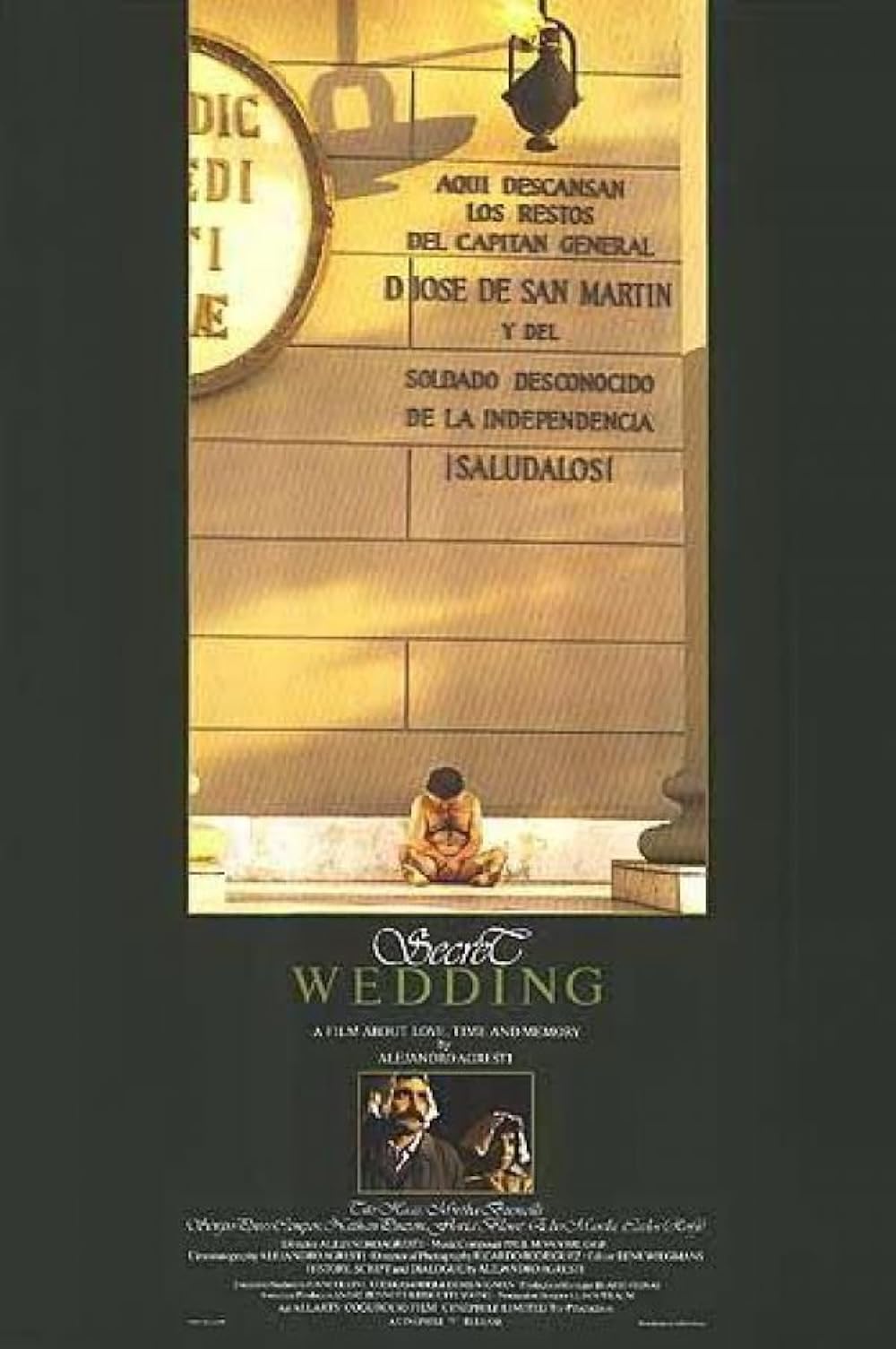
The narrative heart of *Boda Secreta* revolves around Fermín, portrayed by Tito Hass, a man who literally appears naked and disoriented in the middle of a city. His apprehension by the police reveals a shocking truth: he is a "desaparecido," an active militant from the 1970s, targeted and disappeared by the military dictatorship. With a decade of his life erased from his memory, Fermín embarks on a journey back to his provincial town, clinging to a fragmented past. His sole anchor is Tota (masterfully played by Mirta Busnelli), his former fiancée, who has transformed her decade of waiting into a consuming obsession.
However, Fermín's return is far from a simple reunion. Tota, consumed by her own grief and perhaps unwilling to accept the return of a ghost, either doesn't recognize him or actively denies his identity. This rejection forces Fermín into a desperate attempt to reconstruct his past and rekindle their love, often resorting to pretending to be a stranger trying to seduce her, playing a monotonous Eric Satie melody on the bar piano. The town itself is not a place of solace; instead, it's populated by "birds of prey" and a corrupt pastor, figures who actively conspire against Fermín, reflecting the lingering shadows of complicity and decay left by the dictatorship. The film brilliantly captures the psychological aftermath of state terror, not just on the victims but on an entire society grappling with collective amnesia, denial, and suppressed truths. It's a powerful exploration of how personal tragedy becomes interwoven with national trauma.
A Symphony of the Absurd: Agresti's Unique Aesthetic in Boda Secreta
What truly sets *Boda Secreta* apart is its distinctive narrative and aesthetic approach. Agresti crafts a world that dances on the edge of reality, where the grim historical context is filtered through a lens of "anarchical, furious, finally surrealist" humor. The film’s tone is a delicate tightrope walk between laugh-out-loud absurdity and heartbreaking tragedy. It's this contradictory nature – beautiful yet profoundly tragic – that gives *Boda Secreta* its unique power. Characters often behave illogically, dialogue veers into the poetic, and situations unfold with a dreamlike fluidity, reflecting the fragmented reality experienced by Fermín and the distorted memory of a nation.
Agresti masterfully uses elements like the repetitive Satie melody to underscore Fermín's obsessive quest and the pervasive melancholy. This artistic bravery contrasts sharply with his later, more accessible Argentine works such as "Buenos Aires, viceversa" or the commercially triumphant "Valentín." While those films garnered wider audiences and critical acclaim for their directness and emotional appeal, *Boda Secreta* offers a deeper, more challenging, and arguably more profound artistic statement. Indeed, many argue that this early work represents
Agresti's masterpiece beyond commercial success, a film that sacrifices immediate gratification for lasting intellectual and emotional resonance. Its visual poetry and thematic depth firmly establish it as a significant contribution to both Argentine and global surrealist cinema.
Practical Tip: Appreciating Surrealist Cinema
To fully engage with films like *Boda Secreta*, embrace ambiguity. Don't seek linear plot development or strict logical explanations for every event. Instead, focus on the emotional truth conveyed, the symbolic meaning of recurring images, and the overall atmosphere. Allow the film to wash over you, much like a dream, and trust that its seemingly disconnected elements will coalesce into a powerful, if unconventional, narrative. Surrealist films often challenge traditional storytelling to convey deeper psychological or societal truths that cannot be expressed through realism alone.
Beyond the Big Screen: Boda Secreta's Enduring Legacy and Re-evaluation
Despite its artistic merit and critical acclaim in European circles, *Boda Secreta* faced numerous obstacles that hindered its theatrical distribution in Argentina. For years, it remained an elusive gem, known mostly to cinephiles and critics familiar with Agresti's European period. Its belated premiere on Canal 7's "El cine que nos mira" cycle in 1992, bypassing cinemas and video clubs, was a testament to these struggles. Yet, this obscurity ironically contributed to its mythical status, fostering a sense of discovery for those who eventually encountered it.
The film's re-evaluation over time has cemented its place as a crucial work, especially in the context of Argentine cinema's engagement with its traumatic past. *Boda Secreta* offers a unique, non-literal perspective on the "disappeared" and the dictatorship's psychological scars, eschewing historical reconstruction for an exploration of memory's subjective, often painful, terrain. It challenges audiences to confront the uncomfortable truths of national trauma through a deeply personal and disorienting journey, making it more relevant than ever in discussions about historical memory, justice, and reconciliation. Its artistic daring and profound thematic resonance ensure that *Boda Secreta* continues to be studied and appreciated by those who delve into the depths of Agresti's influential career.
Conclusion
Alejandro Agresti's *Boda Secreta* is more than just a film; it is an experience – a challenging, often unsettling, but ultimately rewarding journey into the heart of a nation's trauma, filtered through the extraordinary vision of a master filmmaker. Its blend of surrealism, dark humor, and tragic beauty creates a compelling narrative that resonates with themes of memory, identity, and the enduring power of the past. For cinephiles seeking a profound and unconventional exploration of human resilience and societal wounds, *Boda Secreta* stands as an indispensable and deeply moving piece of cinematic art, a testament to Agresti's genius and a vital chapter in Argentine film history.