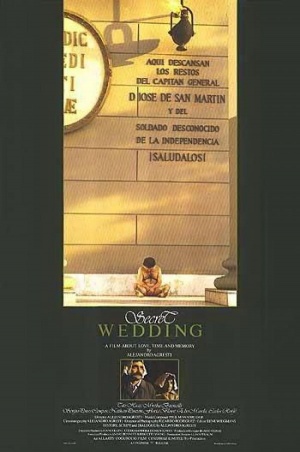
Boda Secreta: Agresti's Masterpiece Beyond Commercial Success
The title "Boda Secreta" might conjure images of clandestine weddings, forbidden love, or perhaps a hidden past. While the name itself hints at intrigue, it's particularly fascinating to explore how this phrase applies to the cinematic oeuvre of Alejandro Agresti, specifically his 1989 film. Often overshadowed by his later, more commercially viable projects, Agresti's Boda Secreta stands as a profound, if challenging, artistic statement, cementing its status as a true masterpiece far removed from mainstream aspirations. This article delves into the depths of Agresti's vision, uncovering the layers of this unique film and its enduring legacy, while also briefly clarifying other narratives that share the intriguing title of boda secreta.
The Unconventional Journey of a Filmmaker: Alejandro Agresti's European Era
Alejandro Agresti's path to becoming one of Argentina's most respected filmmakers was anything but conventional. After initial forays into cinema with ultra-low-budget works like El hombre que ganó la razón and the unfinished La neutrónica explotó en Burzaco, Agresti found his footing during a significant period living and working in Europe, primarily the Netherlands. This nearly decade-long sojourn, which began after the release of his first successfully premiered film, El amor es una mujer gorda (which even garnered an invitation to the Berlin Film Festival), proved formative. It was during this time abroad, always maintaining a connection to his Argentine roots, that Agresti cultivated a distinct, respected, and often mythical filmography.
Boda Secreta (1989) emerged directly from this fertile European chapter, conceived as a co-production between the Netherlands (a country that also supported boundary-pushing films like Greenaway's Zoo: A Zed & Two Noughts) and Canada. This international backing allowed Agresti the creative freedom to explore complex themes without the immediate pressures of a local box office. It was a period that shaped a director unafraid to challenge conventions, whose work would later be rediscovered and celebrated by a sector of Argentine critics upon his return home.
Unveiling the Enigma: The Plot and Themes of Boda Secreta (Agresti's Film)
At the heart of Agresti's boda secreta lies a narrative both surreal and deeply poignant, directly addressing the haunting legacy of Argentina's military dictatorship. The story centers on Fermín, powerfully portrayed by Tito Hass, a man who mysteriously appears naked in the middle of a city, disoriented and devoid of memory. Upon his detention, a shocking truth is revealed: he is one of the *desaparecidos* (disappeared persons) from the brutal 1970s, a militant activist targeted by the regime. His decade-long absence has erased itself from his mind, but not from the fabric of his country's history.
Fermín’s journey takes him back to his former village, where he seeks to reconnect with Tota, his past love, brought to life by Mirta Busnelli's masterful performance. Tota, however, struggles with a profound denial or inability to recognize the man she once knew, her waiting having transformed into an all-consuming obsession. Fermín, in a desperate attempt to reclaim his past and their love, tries to seduce her anew, playing the role of a stranger, haunting the local bar with a monotonous melody by Erik Satie on the piano—a poignant symbol of his fractured memory and persistent longing.
The film masterfully blurs the lines between drama and dark comedy, showcasing Agresti’s unique vision. He populates Fermín’s world with grotesque "birds of prey" and a corrupt pastor, figures that symbolize the lingering shadows and societal decay left by the dictatorship. The humor is anarchic, furious, and ultimately surreal, creating a contradictory tapestry that is both beautiful and tragically real. Through Fermín's ordeal, Agresti delves into profound themes:
- Memory and Identity: The film explores how trauma can fracture one's sense of self and how a nation grapples with a collective amnesia imposed by historical violence.
- The Legacy of Dictatorship: It's a raw examination of the *desaparecidos* and the lingering impact of state terror on individuals and communities.
- Denial and Obsession: Tota's character embodies the struggle of those left behind, grappling with loss, hope, and the painful process of moving on or refusing to.
- Surrealism and Existentialism: The film's dreamlike quality, coupled with Fermín's struggle to understand his existence, creates a deeply existential experience.
For a deeper dive into the film's complex layers and its engagement with political themes, explore Alejandro Agresti's Boda Secreta: Unpacking a Surreal Dictatorship Drama.
A Masterpiece Against the Odds: Distribution Woes and Critical Reappraisal
Despite its artistic merit and profound narrative, Agresti's Boda Secreta faced a tumultuous journey to reach its audience, particularly in Argentina. Plagued by distribution issues of all kinds, the film never saw a theatrical release in its home country, nor was it available in videoclubs or on cable TV for many years. This echoed the fate of another Agresti gem, El acto en cuestión (often considered by many to be his finest work), which only premiered on the Volver channel in 2001.
Instead, Boda Secreta finally found its way to Argentine viewers on Canal 7 (now TV Pública), premiering in 1989 as part of the "El cine que nos mira" series, presented by Carlos Morelli. This unconventional debut meant that a significant work of Argentine cinema bypassed traditional distribution channels, making its initial appreciation a niche affair among critics and dedicated film enthusiasts.
In the context of Agresti's broader filmography, Boda Secreta stands apart. By the mid-1990s, after his return to Argentina, Agresti began to gain wider recognition with films like Buenos Aires, viceversa, La cruz, and El viento se llevó lo que. His most commercially successful and perhaps more superficial film, Valentín, cemented his place in the public eye. Yet, many critics and cinephiles argue that Boda Secreta, with its distinct narrative and aesthetic, holds a far greater artistic value than some of these later, more accessible works. Its unconventionality, surrealism, and unflinching look at a painful national history set it apart, making it a critical darling for those who sought depth beyond commercial appeal.
Navigating the Different "Boda Secreta" Narratives
It's important to acknowledge that the evocative title "Boda Secreta" is not exclusively tied to Alejandro Agresti's film. Indeed, other narratives, often in different mediums, have adopted this compelling phrase. One such instance, for example, is a romantic tale featuring a heroine named Anne (or Dorita), who finds herself terrified by the cruel and extravagant reputation of a Marquis, only to discover he is the very attractive stranger who once saved her from danger. Her heart races, and her world spins as she recognizes the Marquis of Havingham as her mysterious rescuer from a stagecoach accident.
This distinct narrative, rich with elements of mistaken identity, societal pressure, and burgeoning romance, showcases a vastly different genre and context compared to Agresti's poignant drama about political memory and trauma. While both stories might involve hidden identities or a sense of past events resurfacing, their thematic concerns, character arcs, and overall tone diverge significantly. It's a reminder that a powerful title can inspire multiple, unrelated creative works, each with its unique story to tell.
To explore this other intriguing narrative and the trope of hidden identities in romance, consider reading Boda Secreta: When a Terrifying Marquis Hides a Hero's Identity.
Why Boda Secreta Remains Relevant Today
Decades after its quiet premiere, Alejandro Agresti's Boda Secreta continues to resonate with audiences and scholars alike. Its relevance stems from several key factors:
- Enduring Themes: The film's exploration of political repression, the search for truth, and the long-lasting psychological scars of authoritarian regimes remains profoundly relevant in a world still grappling with historical trauma and human rights issues.
- Artistic Boldness: Agresti's willingness to blend genres, employ surrealism, and challenge conventional storytelling makes Boda Secreta a standout piece of cinematic art. It's a testament to his bold directorial vision and his refusal to compromise artistic integrity for commercial gain.
- Masterful Performances: The unforgettable portrayals by Tito Hass as Fermín and Mirta Busnelli as Tota anchor the film's emotional core, giving voice to the voiceless and bringing humanity to a harrowing historical context.
- A Window into Argentine Cinema: The film offers invaluable insight into a specific period of Argentine cinema, showcasing how filmmakers grappled with the country's recent past through innovative and often defiant artistic expression.
For cinephiles and those interested in Latin American history and independent film, seeking out Boda Secreta is a worthwhile endeavor. Be prepared for a cinematic experience that challenges expectations, provokes thought, and leaves a lasting impression far beyond the confines of a typical narrative.
Conclusion
Alejandro Agresti's Boda Secreta is more than just a film; it is a vital piece of cinematic history, a bold artistic statement, and a poignant exploration of memory, trauma, and identity in the wake of political repression. Despite its arduous journey to reach an audience and its initial lack of commercial fanfare, its unique aesthetic and profound narrative have secured its place as a significant work in Agresti's celebrated filmography. It stands as a powerful reminder that true masterpieces often emerge from the fringes, defying commercial logic to deliver invaluable artistic and historical insights. The "secret wedding" here is perhaps the hidden, profound truth it so bravely unveils.